
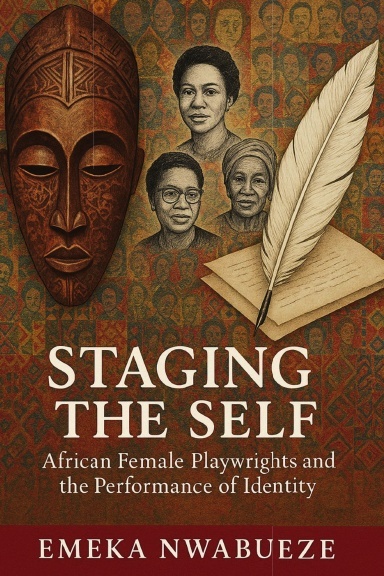
Staging the Self by Emeka is a thought-provoking and intellectually engaging work that delves into the intricate layers of identity, perception, and the human tendency to perform versions of ourselves in different contexts. At its core, the book is not merely a reflection on individuality, but a nuanced exploration of how identity is constructed, adapted, and, at times, unconsciously curated for both internal validation and external acceptance.
Emeka approaches the concept of the “self” with a philosophical lens, inviting readers to question the authenticity of their own identities. The title itself—Staging the Self—serves as a powerful metaphor, suggesting that much of human behavior operates within an invisible theater, where roles are assumed, scripts are followed, and audiences—both real and imagined—shape our actions. This central idea is explored with a tone that is both introspective and analytical, creating a compelling reading experience that resonates across a wide audience, particularly those interested in psychology, sociology, and self-awareness.
One of the book’s most commendable strengths lies in its ability to balance intellectual depth with accessibility. While the themes are undeniably complex, Emeka avoids unnecessary abstraction, instead presenting ideas in a way that feels grounded and relatable. Readers are guided through layered reflections on social behavior, personal identity, and the subtle pressures that influence how individuals present themselves in different environments. Whether in professional settings, social circles, or private moments of introspection, the book highlights the fluid nature of identity and the quiet negotiations that shape it.
The narrative voice carries a sense of calm authority, as though the author is not dictating conclusions but rather opening a dialogue with the reader. This approach is particularly effective, as it allows space for personal reflection. Rather than offering rigid answers, Emeka poses implicit questions—encouraging readers to consider whether the version of themselves they present to the world is truly authentic or carefully constructed. This reflective quality is one of the book’s most enduring contributions, making it less of a one-time read and more of an experience that lingers long after the final page.
Another notable aspect of Staging the Self is its relevance in the modern era. In a time dominated by social media, digital personas, and constant visibility, the idea of “staging” oneself has become more pronounced than ever. Emeka’s insights feel particularly timely, shedding light on how contemporary culture amplifies the need to curate identity. The book subtly critiques this phenomenon without becoming overtly critical, instead offering a thoughtful perspective that encourages awareness rather than judgment.
Stylistically, the writing is measured and deliberate. Emeka demonstrates a strong command of language, favoring clarity and precision over overly ornate prose. This choice enhances the readability of the book, allowing its ideas to take center stage without distraction. The pacing is steady, with each section building upon the last in a cohesive and intentional manner. While some readers may find the contemplative nature of the text slower than more narrative-driven works, this pacing ultimately serves the book’s purpose, reinforcing its reflective tone.
Where the book occasionally shows room for growth is in its desire for further illustration. While the conceptual framework is strong, there are moments where additional real-world examples or anecdotal references could deepen the reader’s connection to the material. Introducing more tangible scenarios might help ground some of the more abstract ideas, making them even more impactful for readers who prefer concrete applications alongside philosophical discussion. That said, this is a minor observation in an otherwise well-executed work.
Emotionally, Staging the Self operates on a subtle yet powerful level. Rather than relying on overt sentimentality, it evokes introspection through recognition. Readers may find themselves pausing, reflecting on past interactions, or reconsidering how they navigate different roles in their own lives. This quiet emotional engagement is one of the book’s most effective qualities, as it fosters a personal connection without forcing it.
In terms of its place within contemporary literature, Emeka’s work aligns with a growing body of writing that explores identity, self-awareness, and the psychology of human behavior. However, what distinguishes Staging the Self is its focused metaphor and consistent thematic execution. The idea of life as a stage is not new, but Emeka revitalizes it with a modern sensibility, making it feel both familiar and freshly relevant.
Ultimately, Staging the Self is a compelling and insightful contribution to the discourse on identity and self-perception. It challenges readers to move beyond surface-level understanding and to examine the deeper motivations behind their actions and self-presentation. The book does not claim to provide definitive answers, nor does it attempt to simplify the complexity of human identity. Instead, it offers something far more valuable: awareness.
For readers seeking a work that encourages reflection, questions assumptions, and invites a deeper understanding of the self, Staging the Self is a worthwhile and enriching read. Emeka has crafted a book that is not only intellectually stimulating but also quietly transformative—one that asks not just who we are, but who we choose to be when the curtain rises.